here&now ft. daniel fine
Daniel Fine is a multi-disciplinary artist whose work spans virtually all mediums. His music, photography, paintings, and videos all share a common thread: his fascination with the ordinary, the strange, and the beautiful of NYC. From cataloging every street in Manhattan to using found sound in ambient music to Walt Whitman ferry poetry, his insights shed light on what you can see when you stay curious and notice what you notice.
I am so excited for you to read my conversation with Dan and explore his work.
IR: Tell me about your practice
DF: First and foremost, I’d like to stress that I am by no means a trained or skilled artist - whatever art I manage to make has been made entirely as a hobby. I’ve always been prone to jumping from medium to medium, and because of that I’ve never mastered or even become all that proficient in any of them. But I’ve felt the inclination to make art my whole life, and it has taken many forms over the years: photography, painting, music, and recently short-form video for TikTok. As different as these avenues of art-making are, they all feel part of the same project to me, and they all relate to my fascination with New York City in one way or another.
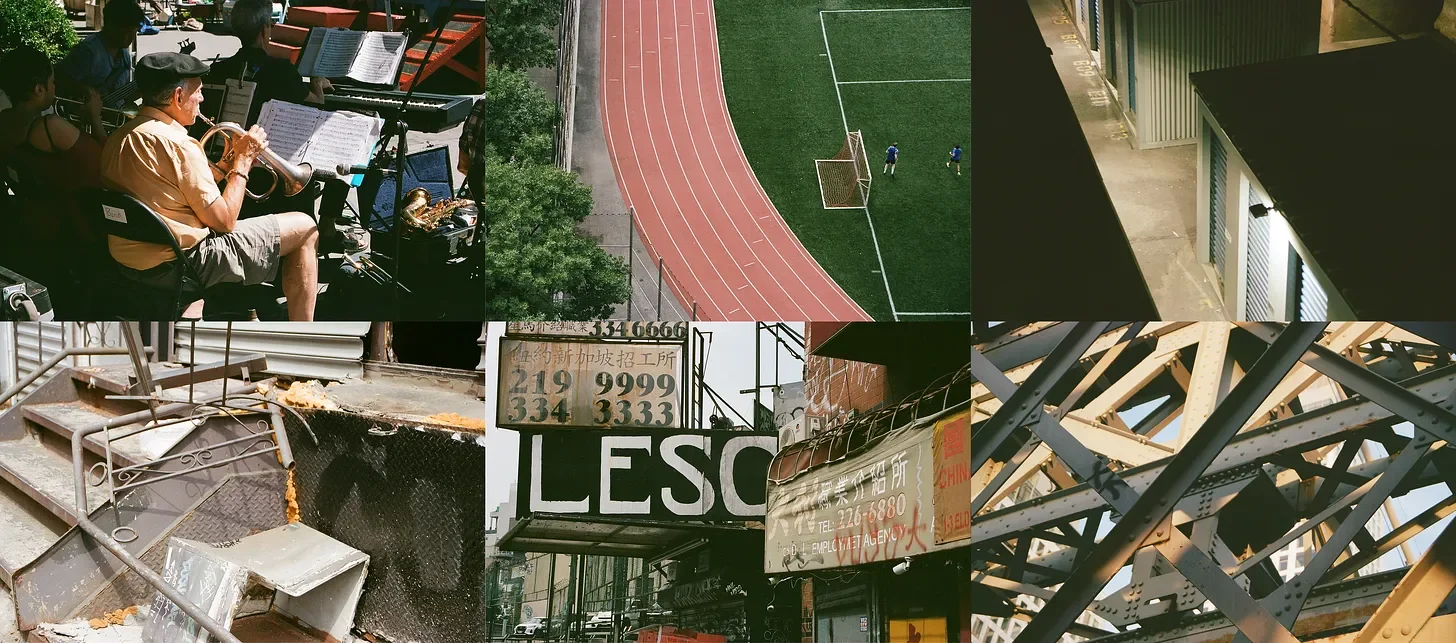
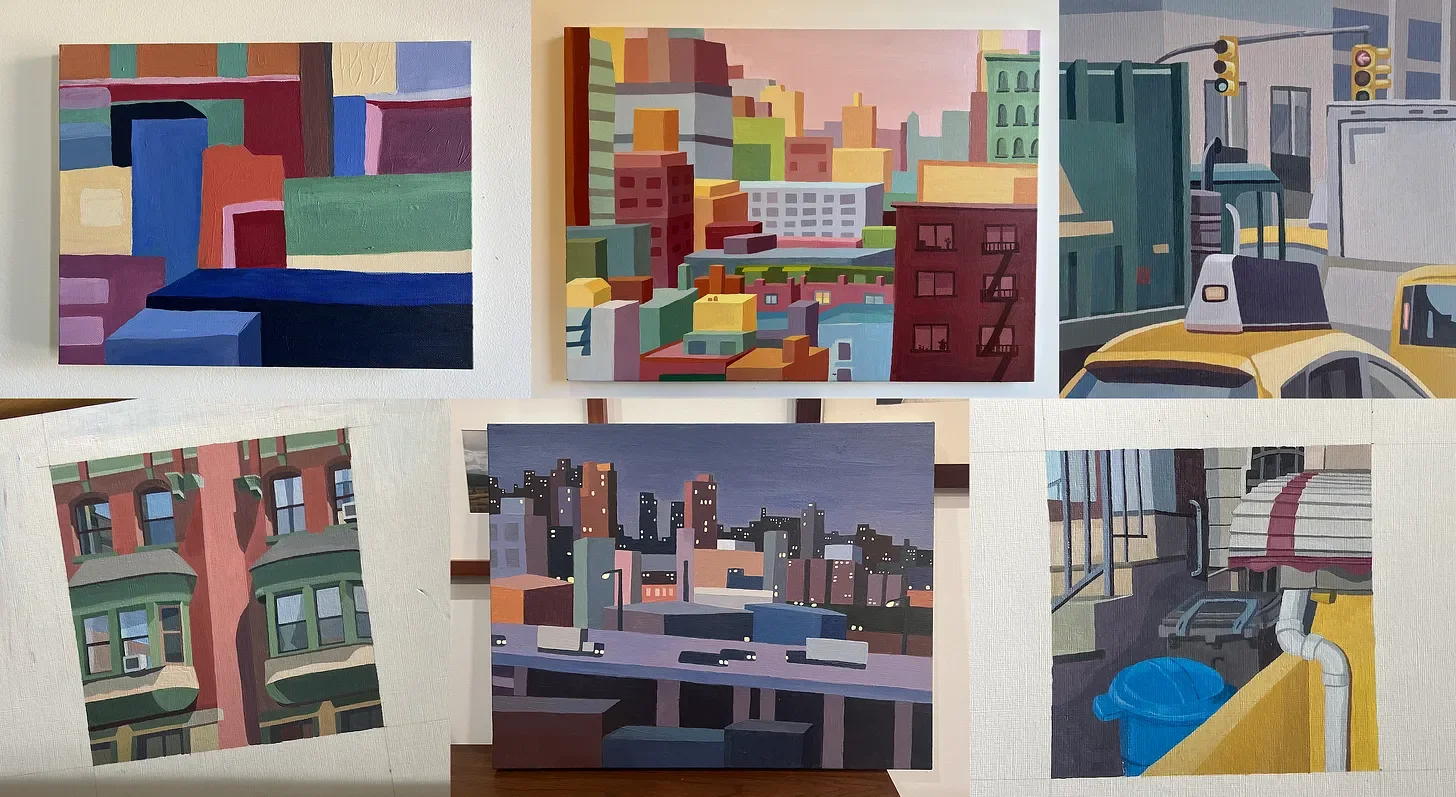
My love for photography has evolved over the years, from obsessively taking iPhone pictures everywhere I go, to bringing a film camera - currently a Canon EOS Rebel 2000 - with me on my city explorations. Painting has been an on-again, off-again passion of mine since childhood, and in recent years it has taken the form of somewhat abstract, colorful, acrylic city-scapes.
Making music, too, has been a hobby that pops up whenever I have time for it. The most notable example I can share of my music is an ambient project I’ve released a few albums under called Still Life. The instrumental pieces I’ve made for this project combine simple piano compositions with city field recordings, strings, and sometimes electronic elements.
Lastly, I want to include my recent project where I walked every street in Manhattan and documented the process with short videos that I posted to TikTok. This was a super fun, multi-modal project, combining urban exploration with a very amateurish type of film-making, as well as a lot of research into the past and present of the city. The short TikToks would feature clips of anything that I found interesting on the walks, fun facts or stories relating to the neighborhoods I was in, and ambient footage intended to show how beautiful even the ordinary parts of New York are.
IR: What role does the city play in your work?
DF: All of the mediums mentioned above have essentially been different ways for me to try to say “look, even the most ordinary and mundane parts of New York City are beautiful, peculiar, astounding...” I get so much joy simply from walking around and looking at things - and there are a lot of things in New York to look at, to try to understand better or to just marvel at their existence.
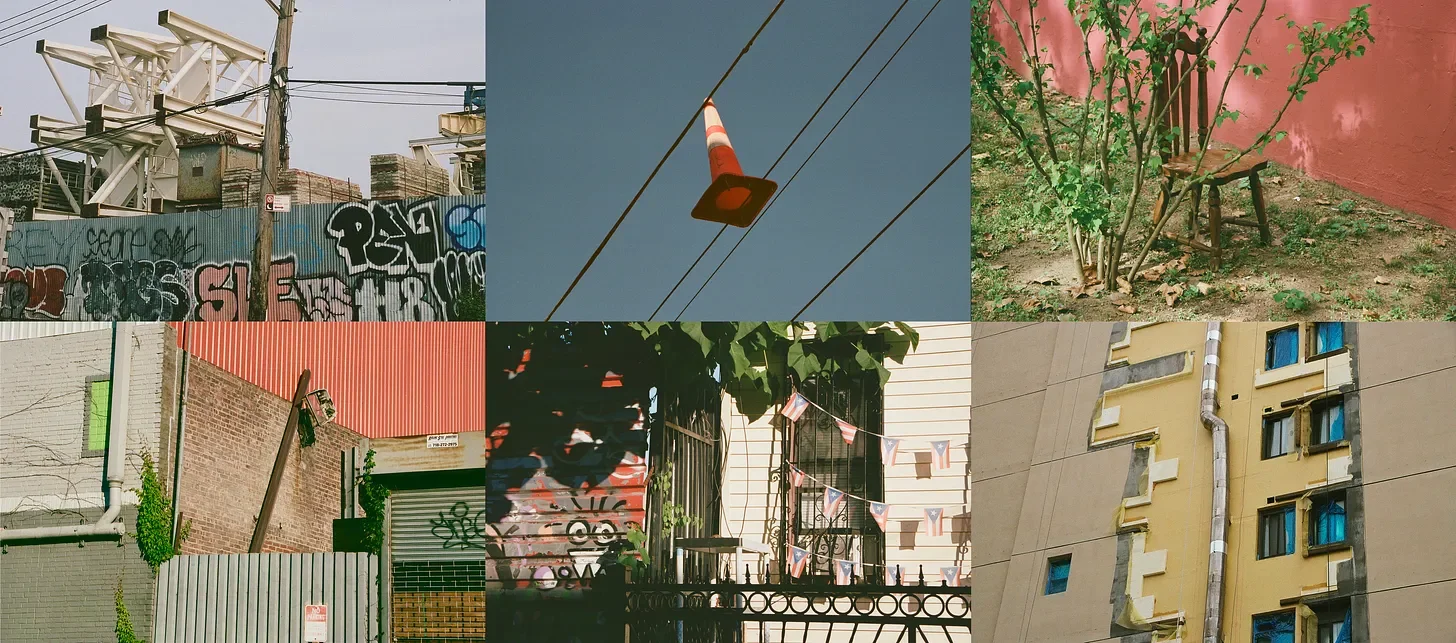
The pictures I take and the footage I collect for the short videos are usually of details I catch out of the corner of my eye - things that seem ordinary but are actually strange and beautiful when you look at them closer.
When I paint, I try to simplify city scenes into more basic shapes and colors, partly because that’s what my skill set allows for, and partly because I feel that the simplification helps capture the feeling of being enchanted by the geometry and vibrance of the city. My ambient project, Still Life, dealt more with memory and heartache, interweaving old voice memos from early trips to New York with romantic piano melodies and trying to spin emotional moments out of found sound.
IR: Is there a particular neighborhood, street, or space that continues to inspire or haunt you?
DF: I have a lot of love for Bushwick, the neighborhood I live in - I often take early evening strolls, leaving from my apartment without any destination in mind to wander the streets, enjoying the character and atmosphere of the neighborhood. In the summer there are always block parties and families sitting on their stoops and dogs running in the parks, familiar faces at the coffee shops and music playing on every corner, and I’m easily reminded of how lucky I am to live here. I also love the liminal industrial edges of the neighborhood, where residential townhouses give way to rusted corrugated metal walls and giant warehouses, over by the cemetery to the east or Newtown creek to the north. These are areas most commonly frequented for popular nightclubs like Elsewhere or Nowadays, but I love walking around them when there’s still light out to expose all the color and grime, weird graffiti and stacks of wooden shipping pallets or tires or kitchen tiles or whatever other eye-candy there is to discover. My favorite spot is a pedestrian bridge over the train tracks on Scott Ave.
IR: A taste of your taste?
DF: I’ve been obsessing over the debut record by jazz vocalist Eliana Glass recently, simply titled “E”. Something about it gives me the same feeling I get when I look at an Edward Hopper painting - evocations of urban loneliness, the inherent melancholy of a city street at night, a stranger glimpsed through an open window. She fills the spaces on this record with weary and winding melodies, sung over dusty piano chords in a way that makes my heart ache. On occasion, a plodding drum pattern or an upright bass, but the world she creates is never cluttered. I’ve been living in this music for the past week.
IR: What are you working on now?
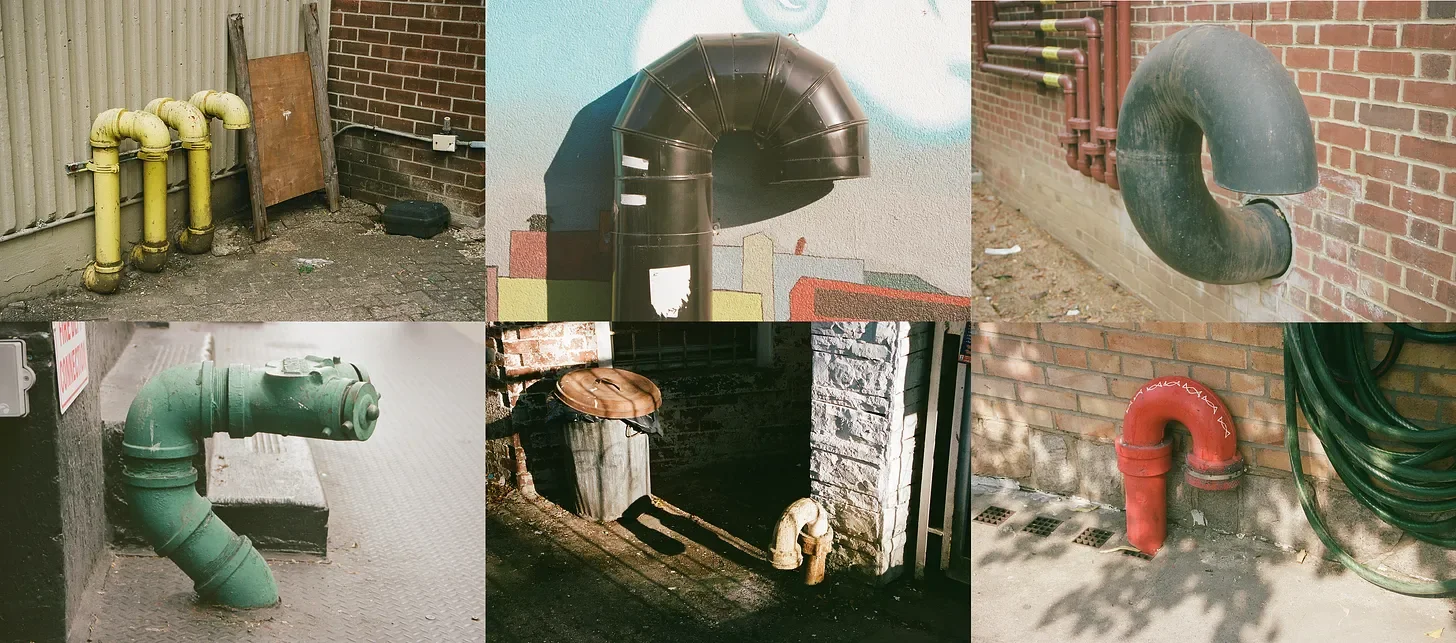
DF: There’s one mini-project that I’ve been working on recently, that I don’t really understand yet - on my usual walks I’ve been taking pictures of ventilation pipes around the city. I love these little things, and I don’t really know why I feel so inclined to document them. I love that they come in all sorts of shapes, sizes, colors, personalities - they feel like my friends when I’m out on a walk. Here are some of my favorites I’ve photographed.
IR: And finally ... do cities remember us?
DF: I think about Walt Whitman’s poem “Crossing Brooklyn Ferry” a lot, especially the part when he muses about “the similitudes of the past and those of the future”, how when he stands on the deck of the ferry he thinks about all of the countless other strangers who have made the same journey across the East River, or all of those who will in 50 years, or in 100 years. When I take the ferry, I think about that poem, and I feel like I’m being remembered by somebody from the past. A truly magical thing happens when an incredibly large amount of strangers reside in the same place - it feels like there’s some sort of energy that flows between everyone who has ever participated in the ongoing community project that is a city. Most of us will be forgotten to time, most of us won’t have made a noticeable impact on the city in the same way architects and politicians do, but each of us contribute in some intangible, unquantifiable way, and the city would be a different place without that. So in that way, yes, cities remember us.