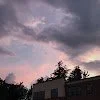
here&now ft. shirley irons
Shirley Irons is New York City based painter that I had the honor of studying under at SVA. The way she captures transient spaces - in flowers, highways, institutions, domestic spaces, and landscapes - has greatly influenced my work and the way I think about what gets left behind. She describes painting as a way to slow down the constant flood of information we receive at every moment, “[looking] for the permanence in the transitory, which is really about hope”.
I am so excited to share more of her insights here. Thank you, Shirley!
IR: Tell me about your practice, and how your environment manifests itself in your work.
SI: For a few years after art school (late ‘70’s) I made mixed media paintings and some dog clocks, hair gel sculptures, turkey breast bone sconces and a tree lamp. As my thinking became my thinking, I worked from photographs taken on hikes, projected on large canvases on the studio wall. I overlapped the images, trying to get a sense of an enclosed nature, branches in my face and stumbling over rocks and fallen trees. Clearly I did not stick to trails. When these looked too naturalistic, I began working on two-panel paintings, pulling the sky out of one panel to exist as a separate piece, trying for the disjuncture that I thought necessary to make the viewer slow down. Several art writers convinced me that this was a dead end (I’m still not sure about that) and I began to make stand-alone paintings of my immediate environment, photo-images that were highly under the influence of the New Topographics photographers. I aimed for images with a low level of information, empty hospital corridors, airports, highways, thinking about institutional spaces. With the isolation of COVID, I began to paint dead flowers from observation. This is a long way of saying that where I am definitely influences what I make.

Second Black Highway, 2003, oil on wood, 41” x 48”
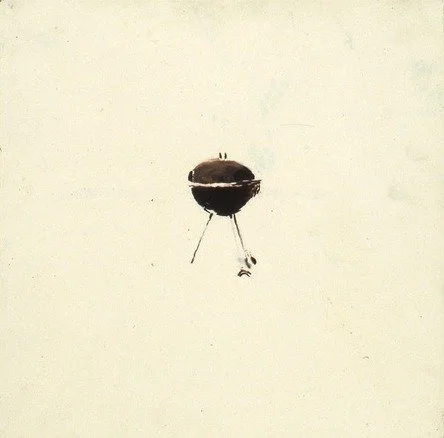
Weber, 1993, oil on wood, 12” x 12”
IR: Is there a particular neighborhood, street, or space that continues to inspire or haunt you?
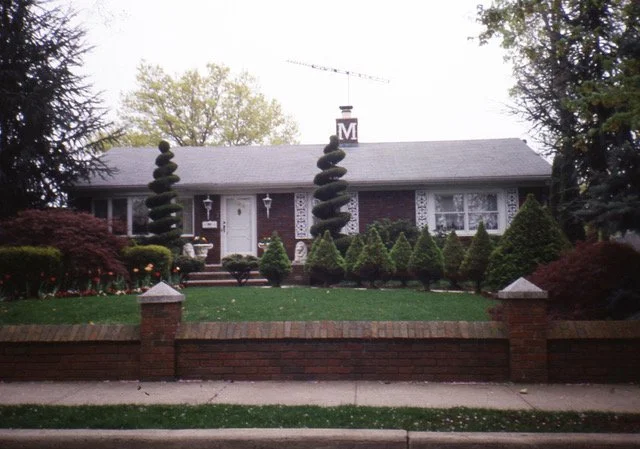
SI: I grew up in Staten Island just as it was changing from rural to suburban and tract housing took over the woods I used to play in. Along with that came a new standard of taste. This is the house across the street from mine.
IR: A taste of your taste?
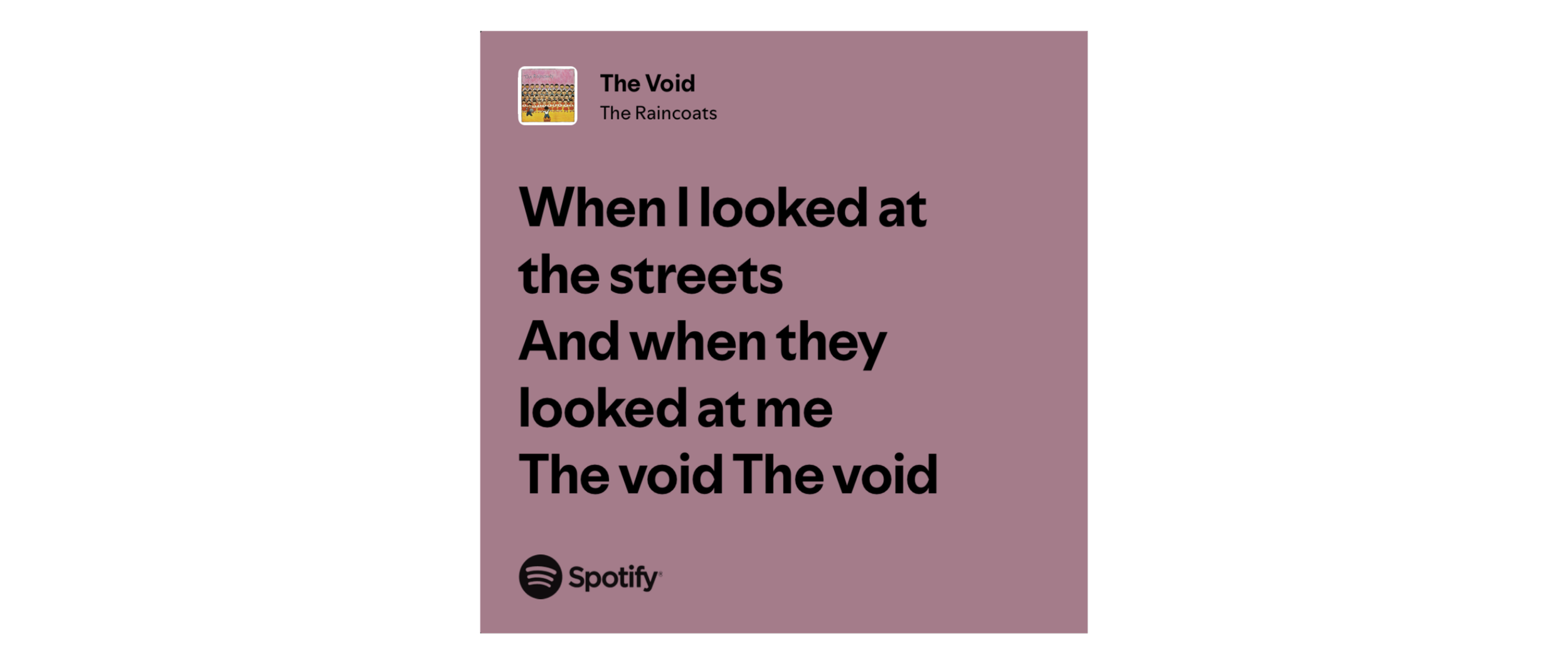
SI: Too many books to name but required reading should include “The Way We Live Now,” Anthony Trollope’s prescient novel about financial scandals. Augustus Melmotte is a shifty, greedy, charming financier, portrayed with humor and generosity for his faults. And I’m a big fan of The Raincoats and The Pixies.
IR: What are you working on now?
SI: I just wrote a review of Alex Kwartler’s show at Magenta Plains for Two Coats of Paint. I’m working on several large (4’x5’) slightly abstracted dead tulips and several small (4”x5”) portraits of carnations.

Violet Glass, 2025, oil on canvas, 46” x 50”
IR: And finally ... do cities remember us?
SI: Ah, what a lovely question! I believe rooms do. I think walls carry traces of the people who lived there.
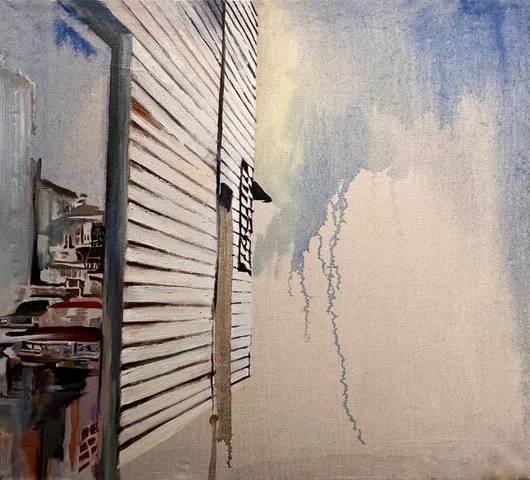
Key, 1991, oil on canvas, 22” x 24”