here&now ft. abigail doan
I was introduced to Abigail Doan through an upcoming here&now contributor, Jacqueline Ferrante. We talked about our work’s relation to the memories a place holds, the preservation of history, and what the unseen people who have passed through a space leave behind. Abigail’s work was referenced, and I think it is especially relevant to the conversation - her fiber artwork is such a potent way to illustrate the literal ‘woven’ history of a place, while her archive of artifacts, objects, and texts emphasises the need for environmental preservation and reconciliation.
I can’t wait for you to read all about her work and process below. Thank you, Abigail.
IR: Tell me about your practice
AD: My interdisciplinary art practice explores environmental narratives, material preservation, and resilience. My studio—more like a library—is an evolving archive of materials designed to be curated, installed, and documented in adaptable ways. Handcrafted, found, and modified objects serve as visual prompts in site-specific contexts. Walking is also central to my work, informing my process in both remote landscapes and dense urban settings. I also fashion and weave sculptural forms out of cloth, fiber, paper, and recycled materials.
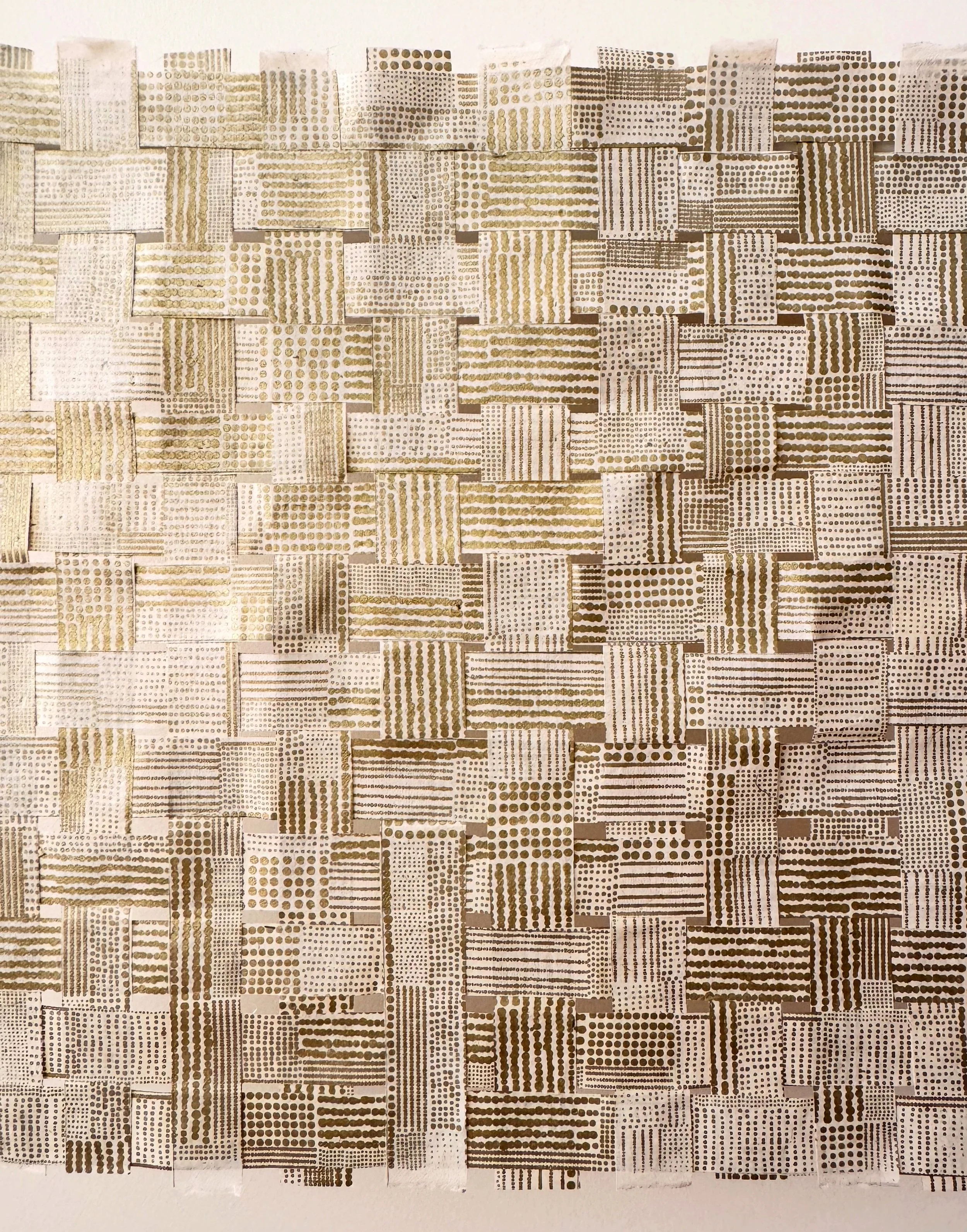
Woven Light
I live between NYC, upstate New York, and Europe, so my practice has had to be flexible and sensitive to events in these places. I used to work as a researcher for documentary films and multi-media projects, so I learned then how to build stories around the issues that most compelled me.
I was raised on a farm in New York State’s Hudson Valley, and even though I moved to NYC during college and art school, I feel very connected to the experiences that I had growing up close to the land. My projects often reflect this via the exploration of terrain, atmospheric happenings, and the resourcefulness that comes from farm life. I sense that this upbringing also made me hypersensitive to sounds, surfaces, and textures in urban settings.
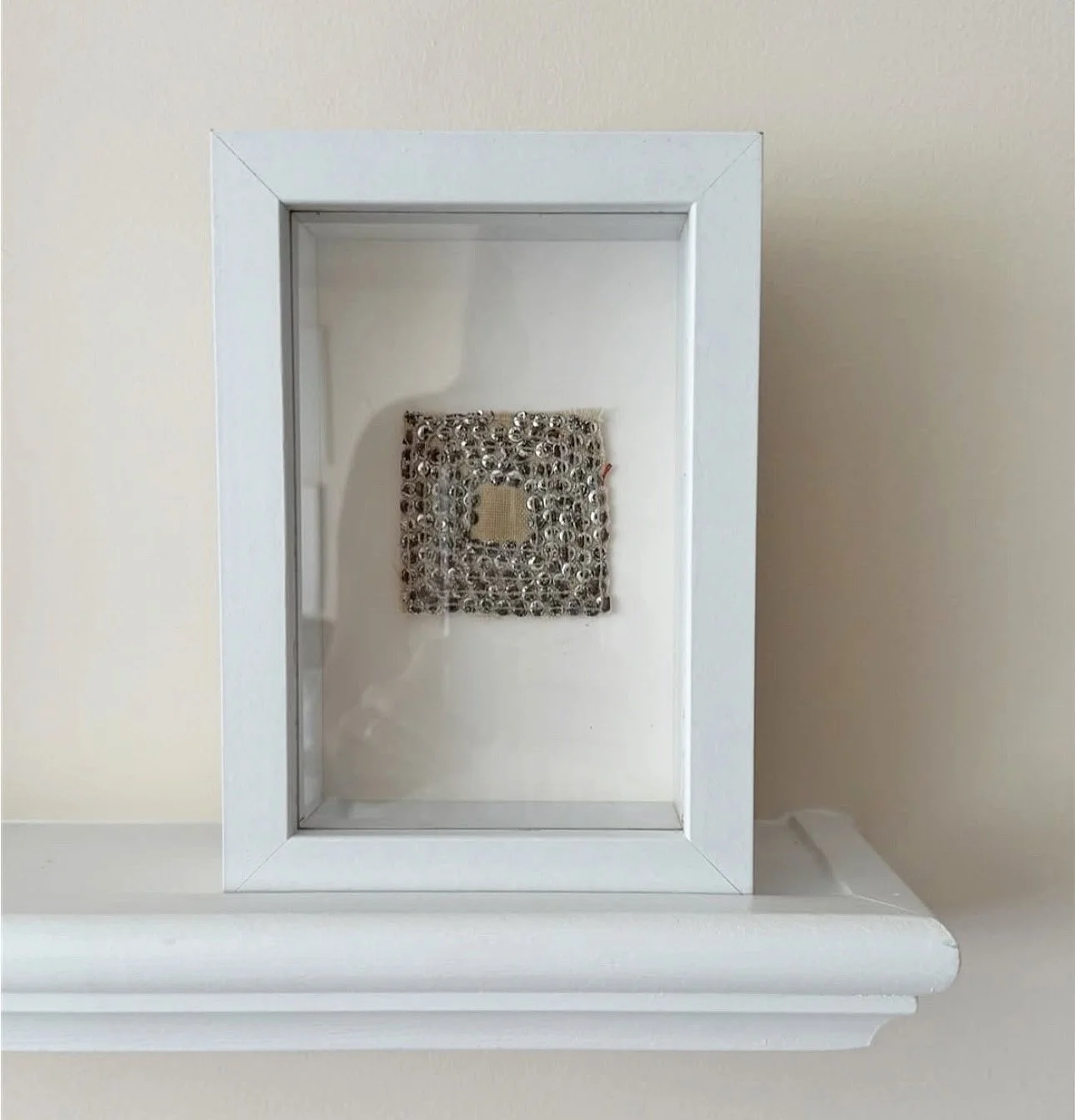
Light Collage
IR: What role does the city (or environment) play in your work?
AD: In 2008, I developed an environmental archiving project titled Urban Fiber Flotsam, grounded in the practice of psychogeographic mapping within contemporary cityscapes. During solo walks through urban neighborhoods, I collected small strands of fiber, bits of flotsam, and discarded materials found on sidewalks and streets. These fragments were then spun, bundled, or woven together, forming tactile records of my movement through the city and the material traces it sheds.
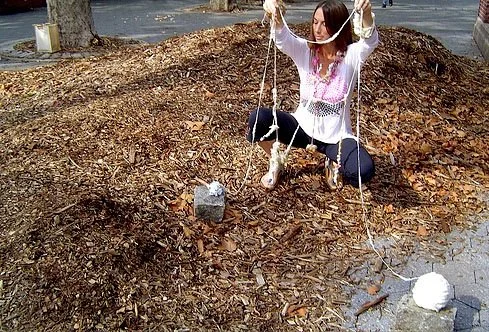
Urban Fiber Flotsam
By approaching city life as I would rural terrain or a desert landscape, I began to view the built environment as an open network and a vast field of data. Each gathered bundle functioned both as a material record of my passage and as a sensor for human activity. This work also sought to reframe urban detritus as something of value—as prompts for memory, attention, and care. It later evolved into Walking Libraries, a visual laboratory and photographic archive that examines historic plots and terrain in this era of climate breakdown and crisis.
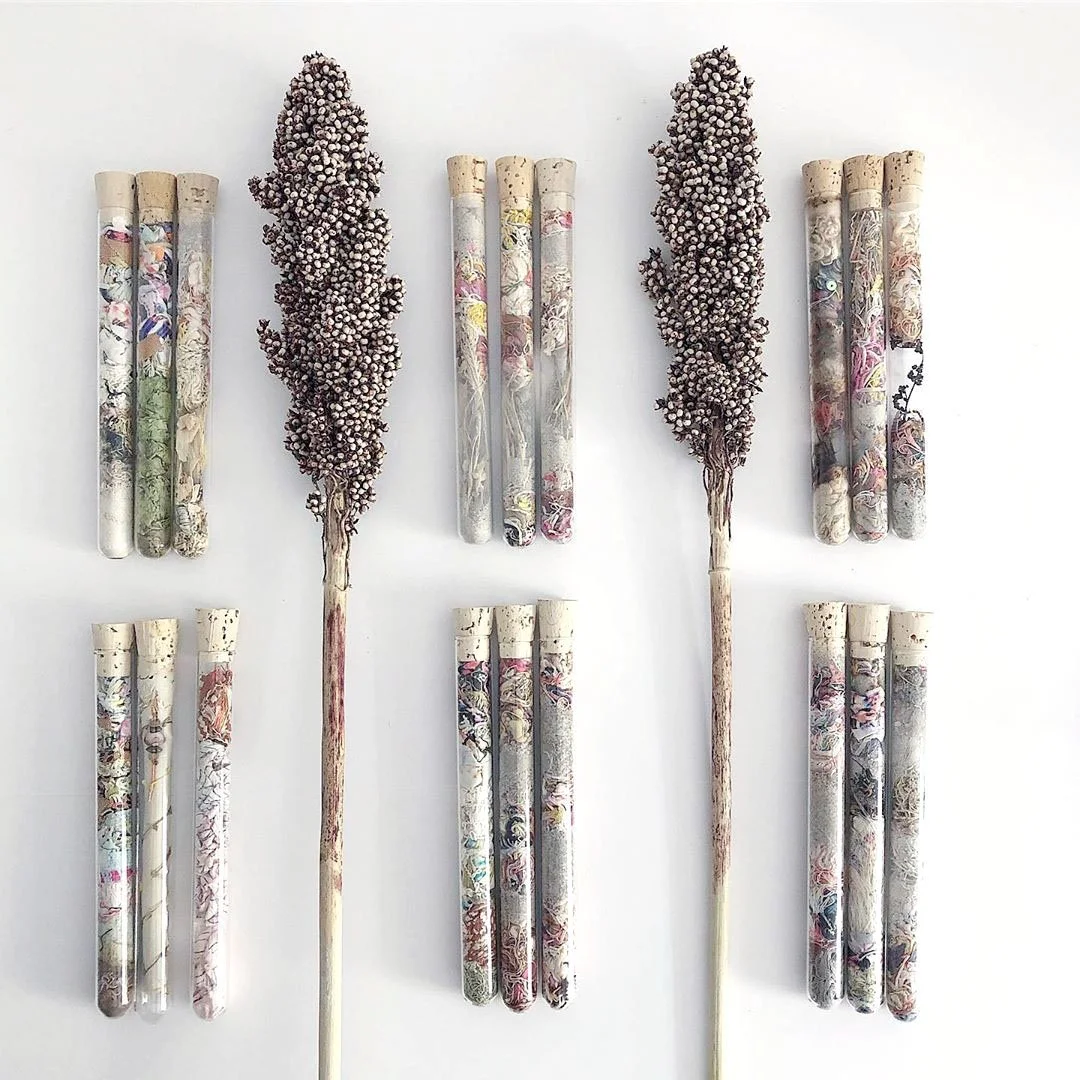
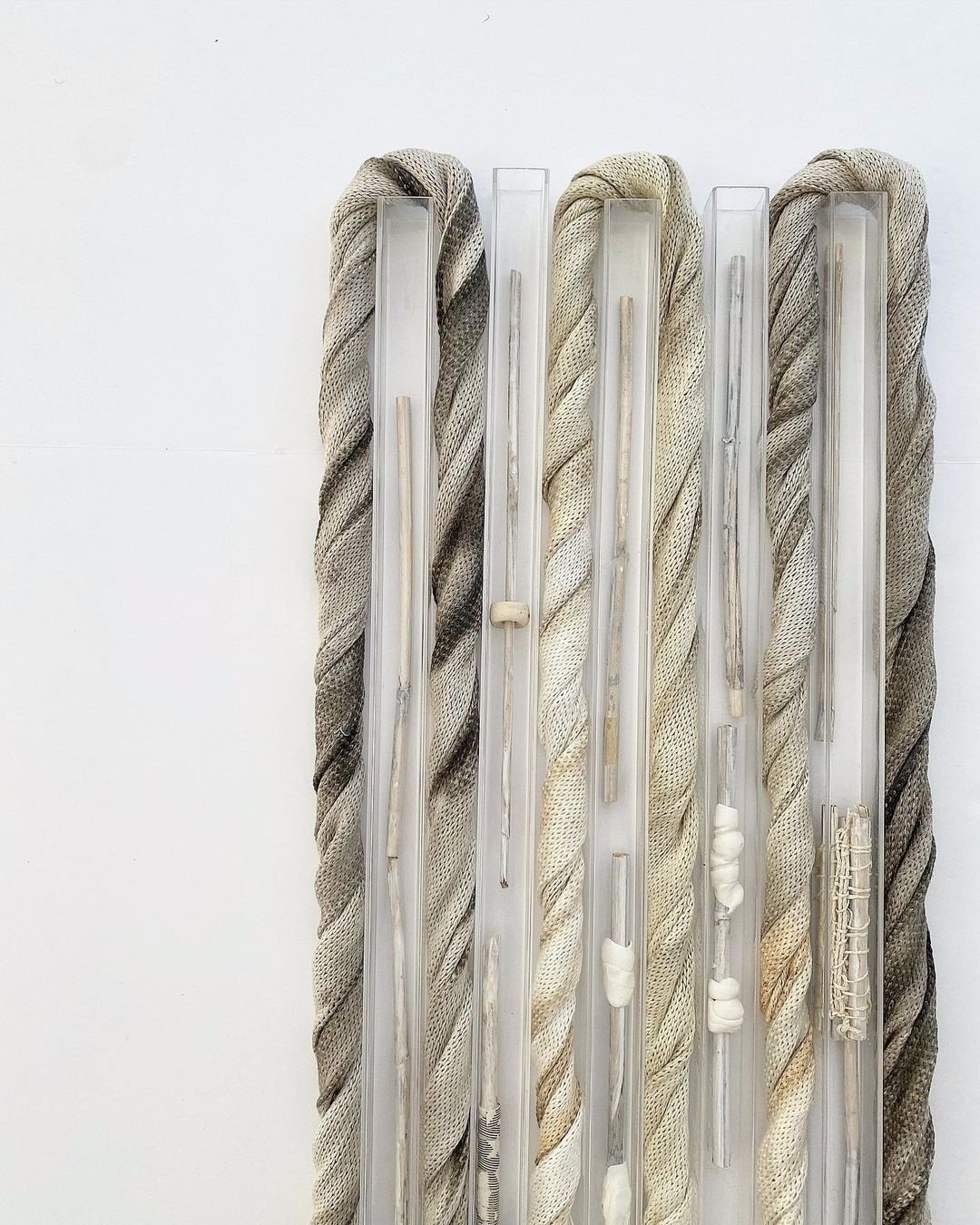
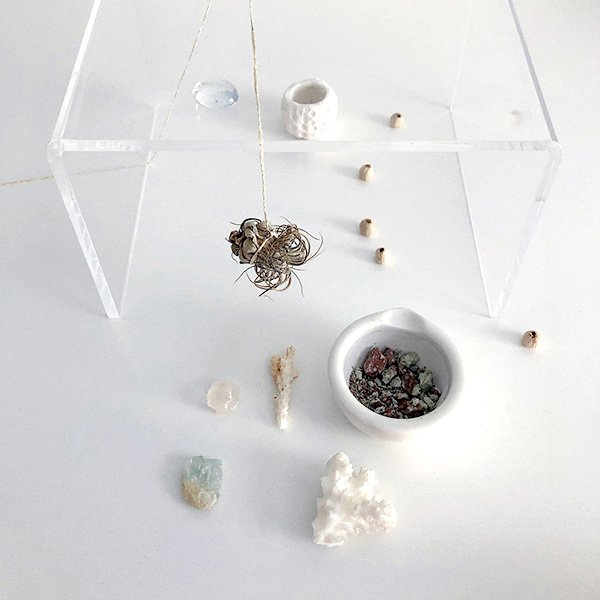
Walking Libraries
IR: Is there a particular neighborhood, street, or space that continues to inspire or haunt you?
I would have to say that SoHo in Manhattan is still a place that resonates with me, or even haunts me, to some degree. I recall being an art student there in the 1980s and the freedom one felt while drifting from loft to loft, visiting artists’ studios, and attending parties. This is truly what inspired me to move to NYC and make a go of it. There were no high-end boutiques or blue-chip galleries per se, and the spaces that did exist were pioneering and inclusive. There was an openness and sense of curiosity that I miss. I spent a lot of time near Howard Street, one block north of Canal Street, where I would visit all the textile warehouses and Canal Plastics on the weekends. I used my limited budget to purchase fine drawing paper and plexiglass boxes to store materials for my early library.
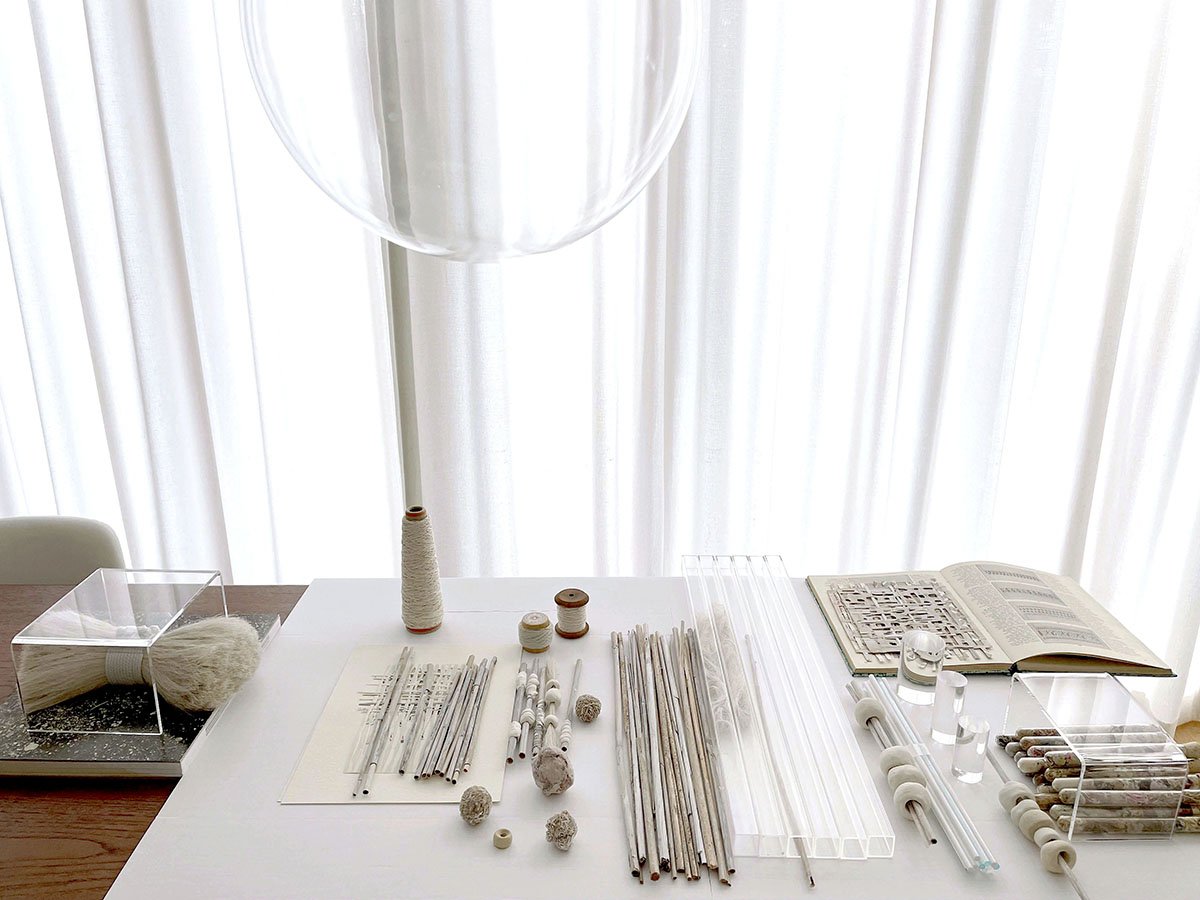
IR: A taste of your taste?
AD: I am definitely a book collector, and while I read the texts and volumes in my library, I also view them as objects with sculptural qualities in their own right. I often intersperse books throughout my workspace to prompt certain ideas or to create imaginary dialogues with other artists, researchers, and writers.
Right now, I am revisiting a beautiful book, Agnes Martin: Independence of Mind, published by Radius Books in Santa Fe, NM. Beyond my admiration and love for her work, I am drawn to her creative, non‑conforming spirit. I am especially inspired by her deep connection to the places where she lived and worked. Perhaps this resonates with me because I, too, feel bound to certain landscapes and regions—become absorbed in how to distill this into a language and system to be translated and then shared.
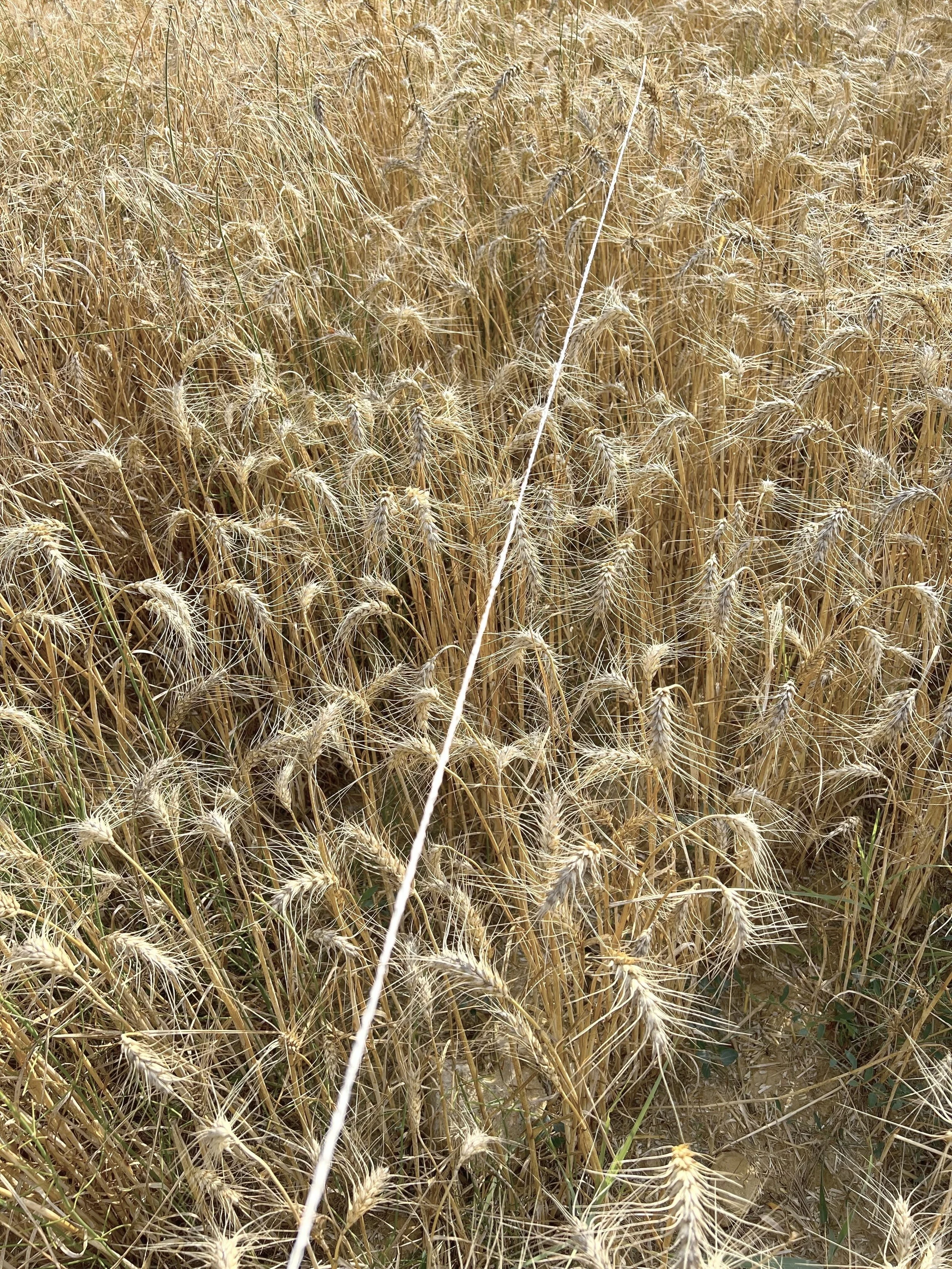
Woven Light Field
IR: What are you working on now?
AD: I have a variety of new projects, or in some cases, old projects that are taking new shape. Some are curatorial, and others are focused on writing specifically. I am delving into writing sessions for my Lost in Fiber Library project, where some of this content filters over to my Substack. The ‘sessions’ are intended to be candid reflections on my art practice, explorations of creativity as an act of complexity (more than an end goal), and prompts to help others stimulate new ideas. I am also working on a personal memoir project called The Other Upstate.
This spring, I will open up my studio archives to share materials I have collected, redesigned, and preserved as part of my Fashion(ing) A.D. project. This research explores how the slow fashioning of materials shapes identity and cultivates tactile dialogues with memory and place.
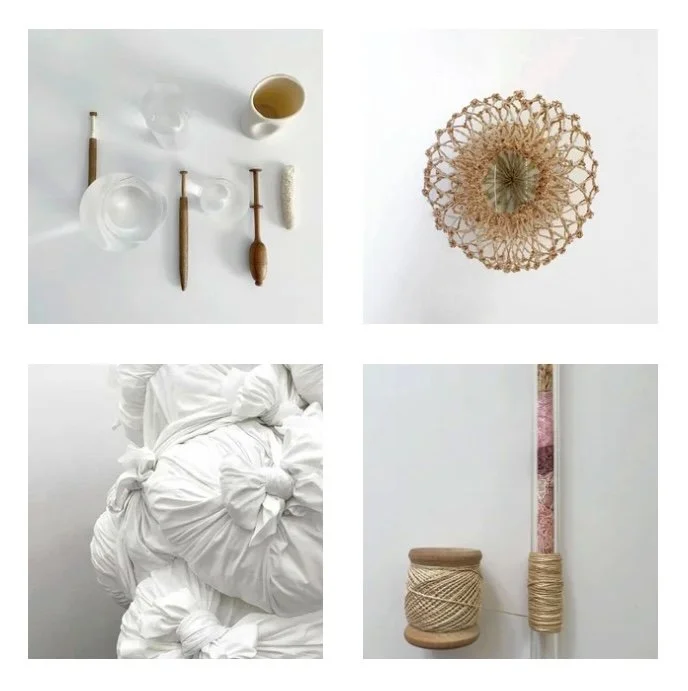
Fashioning Materials
IR: And finally ... do cities remember us?
AD: What an interesting question. I’m not sure if they remember us, but I do think that cities provide complex environments where we are encouraged to explore, intersect with new materials and people, and remember what makes us human. City environments can be dreamlike, and in these states, we’re pulled out of our daily routines to weave together aspects of our lives, past and present. We can shape ourselves into anything we want to be. The city is a backdrop for this and catalyzes change. When I am walking in a city, I get a deep sensation that the urban environment is trying to remind me more than ‘remember me’.
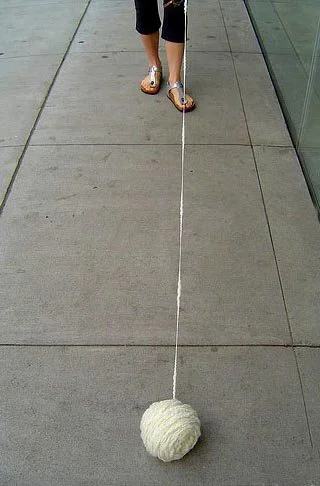
Street Mapping